To train your team to use AI without overwhelm, start small and stay practical: pick a few tools tied to real tasks, teach through hands-on workshops on live projects, set clear guardrails, and follow up over 30, 60, and 90 days so new habits stick. Getting a team to actually want to use AI can feel like an uphill climb. People face tool overload, unclear expectations, and plenty of skepticism. Training isn’t a one-time checkbox. It’s a staged process that combines structure, real work, and culture.
Start With Role-Specific Goals
Leadership has to own the plan. Before any training, decide what AI should help each role do: drafting content, analyzing campaign data, building reports, or managing social. Then choose a small set of tools for those tasks. When you train your team to use AI around their actual responsibilities, the learning feels useful instead of abstract.
Set guardrails at the same time. Clarify what data can go into which tools, which outputs need human review, and how to keep work on-brand. My post on keeping AI content on-brand is a good starting point for those rules.
Build a Foundation of AI Literacy
Everyone needs the basics: what AI tools can and can’t do, how to write a good prompt, and how to check output for accuracy. Free, structured courses can help. Google’s AI Essentials course, for example, promises “hands-on experience using AI tools to develop new ideas, create content, and speed up daily work tasks”, and Google lists it at under five hours to complete. A shared foundation like that gives everyone a common vocabulary before you move to role-specific skills.
Pair it with a shared prompt library. My post on AI prompts for marketing has examples your team can adapt.
Teach Through Real Work, Not Generic Tutorials
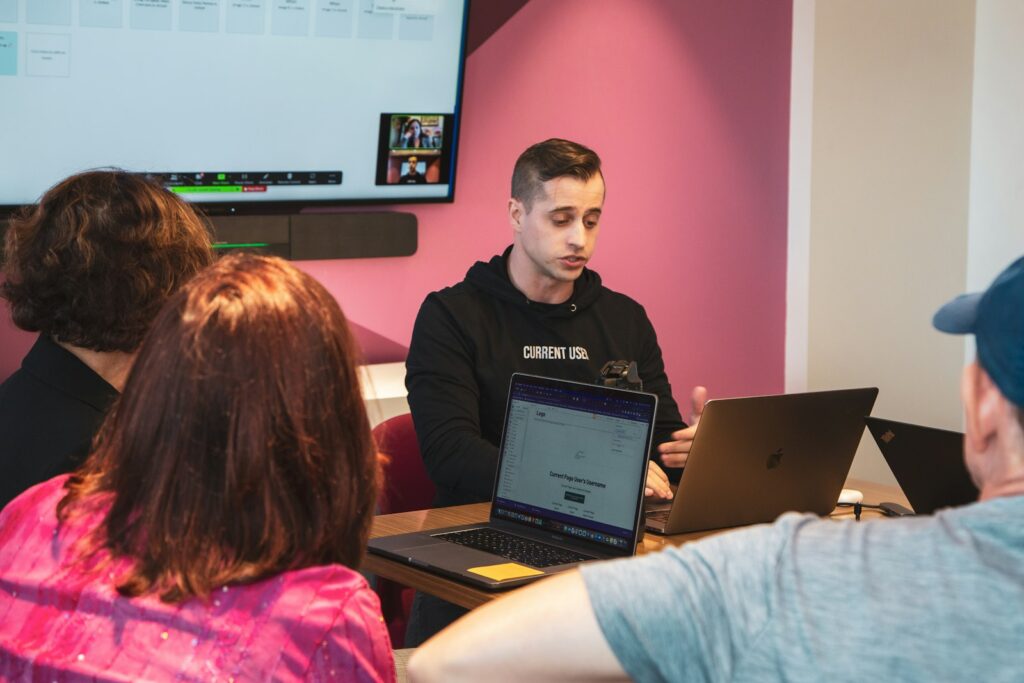
The fastest way to build skill is to practice on actual tasks. Run workshops where people use AI on live projects: drafting an email sequence, repurposing a blog post into social content, or summarizing campaign results. Focus on one task at a time. Shifting from “learn this tool” to “do this task” cuts overwhelm dramatically.
Protect time for experimentation, too. People learn faster when they’re allowed to try, fail, and compare approaches without pressure to deliver immediately.
Address the Culture Shift
AI adoption is as much about mindset as skill. Some team members worry about being replaced. Others doubt the quality. Be direct: AI is there to remove busywork and support better thinking, not replace judgment or creativity. Share wins openly, and invite skeptics to help define the guardrails. My post on human-AI collaboration explores how to frame that balance.
Follow Up for 90 Days
The best way to train your team to use AI is to treat it as an ongoing habit, not a one-day event. Most training fades without reinforcement. Schedule check-ins at 30, 60, and 90 days to share what’s working, troubleshoot problems, and add the next skill. Track simple signals: how often people use the tools, how much time they save, and whether quality holds up. Adjust as you go.
A Practical Plan to Train Your Team to Use AI
- Define two or three high-value tasks per role.
- Choose a small set of approved tools and set clear guardrails.
- Build basic AI literacy with a short, structured course.
- Run hands-on workshops on live projects.
- Keep strategy, brand, and final approval human-led.
- Follow up at 30, 60, and 90 days.
For tool selection, see how to choose AI marketing tools, and for examples of what trained teams can do, see my post on AI marketing workflows.
Frequently Asked Questions
How do I keep my team from feeling overwhelmed?
Limit the number of tools, tie every lesson to a real task, and add new skills gradually.
Will AI replace my marketers?
No. AI handles repetitive work so your people can focus on strategy, creativity, and customers.
How do I measure whether training worked?
Look at adoption, time saved, output quality, and team confidence over the first 90 days.
What’s the biggest barrier to adoption?
Usually unclear leadership and a lack of follow-up, not the technology itself.
Lead the Change
When you train your team to use AI with structure and patience, you get a faster, more confident team without losing the human strengths that make your marketing work. Most brands don’t have a marketing problem. They have a leadership gap. If you want help building AI skills into your team, explore my AI marketing consulting and Fractional CMO services, browse the blog, or start a conversation.